Blog Details
Expert Medical Insights
Early Signs of Brain Stroke You Should Never Ignore
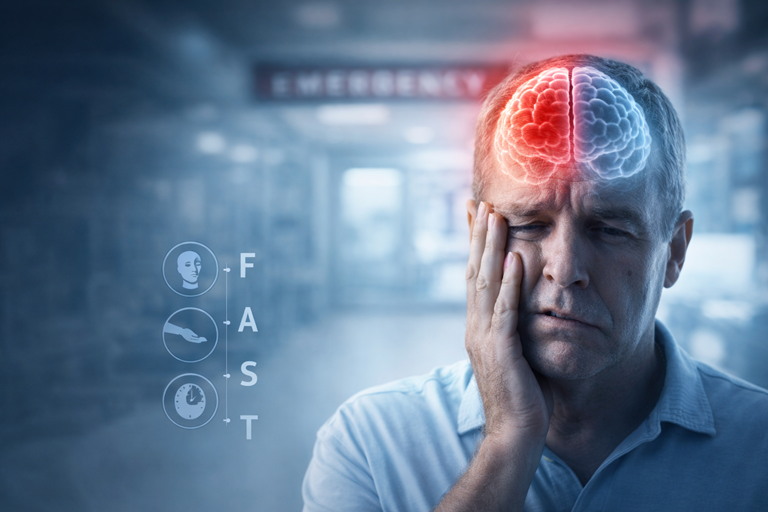
A brain stroke is a medical emergency that occurs when blood flow to a part of the brain is interrupted or reduced. Without oxygen and nutrients, brain cells begin to die within minutes. Recognizing the early warning signs and seeking immediate medical care can save lives and prevent permanent disability.
What Is a Brain Stroke?
A stroke happens when:
- A blood clot blocks a blood vessel in the brain (Ischemic Stroke), or
- A blood vessel bursts causing bleeding in the brain (Hemorrhagic Stroke).
Both conditions require urgent medical treatment.
Early Signs of Brain Stroke
Below is a clear and easy-to-understand table explaining the common early symptoms:
| Warning Sign | What It Feels Like | Why It Happens | Action Required |
|---|---|---|---|
| Sudden Weakness | Weakness or numbness in face, arm, or leg (especially one side) | Disrupted blood supply to brain area controlling movement | Call emergency services immediately |
| Facial Drooping | One side of the face appears uneven or droops while smiling | Nerve control affected in brain | Seek emergency care |
| Slurred Speech | Difficulty speaking or understanding words | Brain area controlling speech affected | Immediate medical help required |
| Sudden Confusion | Trouble understanding simple instructions | Brain function impairment | Emergency evaluation needed |
| Severe Headache | Sudden, intense headache without known cause | Possible brain bleeding | Go to hospital urgently |
| Vision Problems | Blurred, double, or loss of vision in one or both eyes | Blood flow issue affecting optic nerves | Immediate consultation |
| Loss of Balance | Dizziness, trouble walking, loss of coordination | Brainstem or cerebellum involvement | Seek urgent care |
Remember the F.A.S.T. Rule
F – Face drooping
A – Arm weakness
S – Speech difficulty
T – Time to call emergency help
If you notice any of these signs, do not wait. Every minute counts.
High-Risk Factors for Stroke
People with the following conditions are at higher risk:
- High blood pressure
- Diabetes
- High cholesterol
- Smoking
- Obesity
- Heart disease
- Family history of stroke
Regular health check-ups can reduce risk significantly.
Why Immediate Treatment Is Critical
Brain cells begin to die within 4–5 minutes without oxygen. Early treatment can:
- Reduce brain damage
- Prevent paralysis
- Improve recovery chances
- Save life
The earlier the treatment, the better the outcome.
When to Go to the Hospital
Do not wait for symptoms to improve. Even if signs disappear within a few minutes (possible mini-stroke or TIA), immediate medical evaluation is essential.
Conclusion
A stroke can happen suddenly and without warning, but the body often gives early signals. Recognizing symptoms like facial drooping, arm weakness, speech difficulty, or sudden severe headache can make the difference between full recovery and permanent disability.
If you or someone around you shows signs of stroke, seek emergency medical attention immediately. Quick action saves brain function — and saves lives.
Recent Articles
Need Expert Consultation?
Our specialists are ready to help you with world-class neurological care.
Book Appointment